A blade sign is one of the quietest workhorses in storefront marketing. It hangs perpendicular to your building, sticking out into the sidewalk’s line of sight, and catches the eye of people who would otherwise walk right past a flat wall sign. If your shop sits on a busy street or shares a strip with neighbors, a well-designed blade sign can be the difference between foot traffic that stops and foot traffic that keeps moving. The best part? There’s huge room for creativity. Here are seven ideas that turn a simple projecting sign into a magnet for customers.
What Makes a Blade Sign So Effective
Before the ideas, it helps to understand why this format works. A blade sign reaches pedestrians at an angle, so someone walking down the block sees it long before they reach your door. Flat signs disappear once you’re standing parallel to them; a projecting sign stays visible.
That visibility is exactly why blade signs pair so well with other storefront elements. They guide people toward the entrance, reinforce your brand at street level, and work hard in dense retail areas where every business is competing for the same glance. Think of it as a handshake offered from across the sidewalk. Now let’s look at how to make that handshake unforgettable.
1. Go Dimensional With Shaped Edges
Most blade signs are rectangles. You don’t have to be. A die-cut or shaped blade sign that mirrors what you sell – a coffee cup for a café, scissors for a salon, a book for a shop – instantly tells passersby what’s inside without a single word.
Shaped signs read faster than text because the brain processes a familiar object quicker than it reads a sentence. If you want your storefront to communicate at a glance, a custom silhouette is one of the strongest moves you can make. It’s also memorable, which means people describe your shop to friends as “the one with the giant pretzel sign.”
2. Add Lighting for Day-and-Night Visibility
A blade sign that vanishes at dusk is only doing half its job. Adding illumination keeps you visible during evening hours, overcast afternoons, and the early dark of winter.
You have options here. Halo-lit edges create a soft glow, internal illumination makes the whole sign light up, and exposed bulbs give a vintage marquee feel. Each look sets a different mood, so think about whether you want to feel cozy, modern, or playful after dark. If you’re weighing energy use and lifespan, it’s worth understanding how LED signs work for businesses before you choose a lighting style. LED options sip power and last for years, which keeps your running costs low. Illuminated signs don’t just extend your visible hours – they signal that you’re open, active, and worth a look.
3. Lean Into Vintage and Hand-Crafted Charm
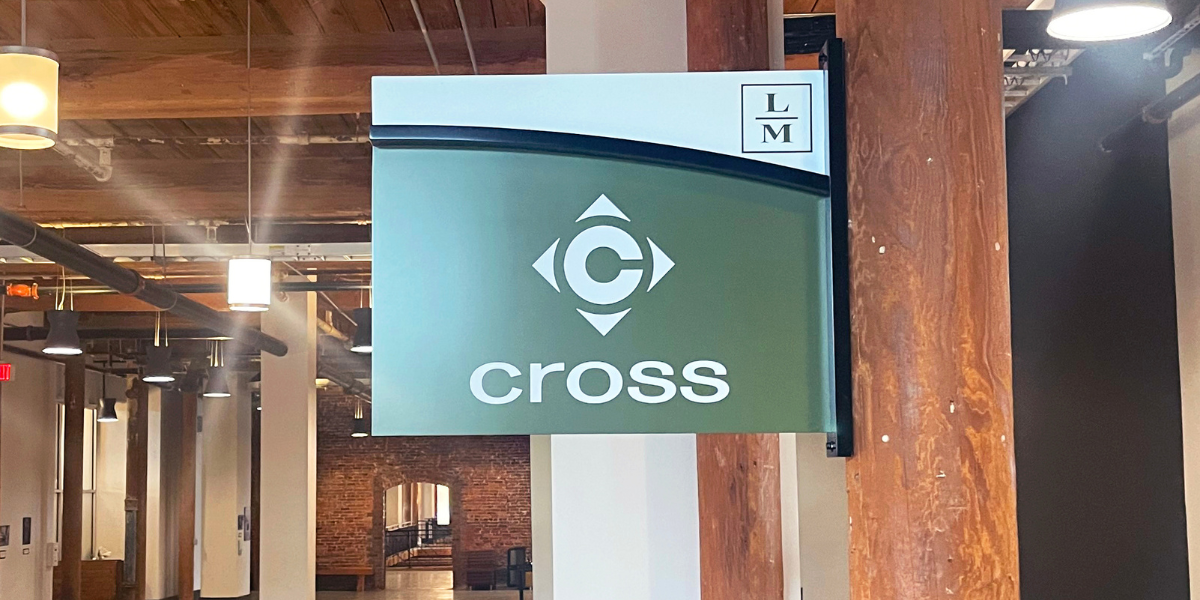
There’s a reason old-school hanging signs feel so inviting. A blade sign with a hand-painted look, distressed metal, or classic ironwork bracket gives your storefront warmth that a flat printed panel can’t match.
This works especially well for bakeries, bookshops, pubs, barbershops, and any business selling craft or character. The decorative bracket alone becomes part of the charm. Pair an artisanal blade sign with complementary custom signs that help your brand stand out, and you create a storefront people want to photograph and post. In an age of identical chain facades, a little handmade soul goes a long way.
4. Match the Sign to Your Architecture
A blade sign shouldn’t fight the building it hangs on. One of the most powerful ideas is also the most subtle: design the sign to complement your storefront’s materials, era, and color palette.
A sleek brushed-metal blade sign suits a modern glass facade, while a wooden or wrought-iron piece feels at home on a brick or historic building. Matching scale matters too – an oversized sign on a small shop looks awkward, and a tiny sign on a tall facade gets lost. When the sign and the architecture speak the same language, the whole storefront looks intentional and professional. The same thinking that goes into choosing the right building sign for your storefront applies to the blade sign that hangs beside it.
5. Use Bold Color and Contrast
Subtlety has its place, but a blade sign that blends into the wall is a missed opportunity. High contrast between your text, background, and the building behind it makes your sign legible from far down the block.
Pick colors that pop against your facade. A dark sign on a light wall, or a bright sign on a dark wall, reads cleanly at a distance. Keep the design simple – a logo, a few words, maybe an icon. Overcrowded signs lose their punch. Bold, confident color is one of the easiest ways outdoor signage drives foot traffic, and a striking blade sign is a perfect place to be brave. You can see how outdoor signage pulls people toward your store when color and placement work together.
6. Combine the Blade Sign With Dimensional Letters
Why choose between a projecting sign and raised lettering when you can pair them? A blade sign that uses dimensional letters instead of a flat printed face adds depth, casts subtle shadows, and looks premium from every angle.
Raised letters catch light differently throughout the day, giving your sign a living, shifting quality that flat graphics can’t replicate. This approach reads as high-end, which is exactly the impression upscale boutiques, salons, and restaurants want to make. If you’re curious about the process, here’s a look at how dimensional letters are made and installed. A blade sign built this way turns a basic identifier into a small piece of craftsmanship.
7. Create a Cohesive Sign System
Your blade sign shouldn’t be an island. The most powerful storefronts treat every sign – the blade sign, the main wall sign, the window graphics, the door decal – as one connected system.
When fonts, colors, and logos repeat across all your signage, customers absorb your brand faster and trust it more. A blade sign that matches your storefront’s overall identity reinforces everything else, and the repetition makes you memorable. This kind of coordinated branding is where a partner like Element 4 Signs & Graphics earns its keep, mapping out how each sign supports the others so your whole storefront works as a single, confident statement.
A blade sign is a small investment that punches well above its weight. Whether you go bold with color, warm with vintage charm, or sleek with dimensional letters, the goal is the same: catch the eye, communicate fast, and pull people through your door. You don’t need to use all seven ideas at once – even one strong choice can transform how your shop reads from the sidewalk. Pick the idea that fits your brand, give it a quality build, and let your storefront start working for you out on the street, not just at the entrance.
FAQs
- What is a blade sign?
A blade sign is a sign that projects out perpendicular from a building wall, rather than lying flat against it. Because it sticks out into the walkway, pedestrians can see it from down the block. It’s a popular choice for storefronts, especially in busy retail areas.
- How big can a blade sign be?
Size depends on your local sign codes, which often limit how far a sign can project from the building and how high it must hang above the sidewalk. Many cities cap projection at around four feet and require a minimum clearance for pedestrians. Always check your municipality’s rules before finalizing a design.
- Do blade signs need to be illuminated?
Not necessarily, but lighting greatly extends when your sign is visible. Illuminated blade signs stay effective at dusk, at night, and on gray days. If your business keeps evening hours or sits on a dimly lit street, lighting is well worth the investment.
- What materials work best for a blade sign?
Common options include aluminum, acrylic, wood, and combinations with metal brackets. The right choice depends on your look and your environment – metal and acrylic hold up well outdoors, while wood suits a vintage or craft aesthetic. A quality finish protects against weather and fading.
- Are blade signs only for retail stores?
No. While they’re popular with shops and restaurants, blade signs work for any business with a street-level presence, including salons, offices, cafés, and service providers. Anywhere foot traffic passes by, a projecting sign helps you get noticed.
- How do I get a permit for a blade sign?
Most cities require a permit for projecting signs because they extend over public walkways. You’ll typically submit your design, dimensions, and mounting details to your local permitting office. An experienced sign company can handle this process and make sure your sign meets all local requirements.
Explore Our Services: Blade Signs | Outdoor Signs | Building Signs